
How to Do the Ballerina Pole Move with 10 Variations


If you’ve been looking to improve your pole skills and create graceful pole routines, the pole ballerina is an essential pole pose to master. In this blog, you’ll discover how to do ballerina pole move, along with 10 variations to boost your pole fitness, flexibility, and pole technique. Whether you’re expanding your pole skill set on a static and spin pole, each variation helps build strength and control on the pole. Let’s dive into these step-by-step pole lessons designed for every pole dancer, from beginners to advanced levels.
What Is the Ballerina Pole Move?
The ballerina pole move takes inspiration directly from ballet’s iconic arabesque pose. In ballet, an arabesque is when a dancer stands on one foot with the other leg extended gracefully behind, creating an elegant line. The arms and upper body further enhance this shape, emphasizing balance and poise. Similarly, the pole ballerina recreates this beautiful pose on the pole, combining strength, flexibility, and body control. Due to this striking resemblance to the arabesque, pole dancers naturally named this elegant and classic shape the pole ballerina.

Pole Level and Requirements
The ballerina pole move has many variations designed for pole dancers of every level—from beginners to experts. While the ballerina pole knee hold or the cross leg ballerina are beginner-friendly variations, moves like the Alvin Ailey ballerina and the classic regular ballerina fall more into the intermediate skill level. For advanced pole dancers, the flying ballerina is a suitable and exciting challenge. The ballerina split is considered an expert-level pole variation, requiring extreme flexibility, particularly in the hips, hamstrings, and back. Knowing your current flexibility level and skill set can help you choose the most appropriate ballerina pole variation to practice safely.
Essential Skills Before Trying the Ballerina Pole Move1
Depending on which ballerina pole variation you’re learning, the required skill set may vary. Generally speaking, you should be comfortable performing a basic pole climb. It forms the foundation for many entries into the ballerina variations. However, there are some exceptions allowing you to start practicing from the floor. It’s also essential to have mastered the twisted grip, as it’s used in most ballerina variations. Additionally, it is beneficial to learn how to do a crossed leg bow on the pole, which is a forward fold.
Warm-up for the Ballerina on the Pole
Preparing your body with warm-up exercises focusing on shoulder flexibility and torso rotation is crucial. These warm-ups help open your shoulders and torso, ensuring you can safely achieve the necessary twisting movements and maintain correct alignment throughout the move. Here are 2 sequences we recommend with targeted warm-ups from our tutorials that will prepare you for the ballerina on the pole.
The Phoenix Warm-Up Flow is ideal, as it emphasizes side-body stretches and shoulder-opening movements. Incorporating this warm-up sequence into your pole training will help you safely achieve proper alignment for ballerina pole variations.
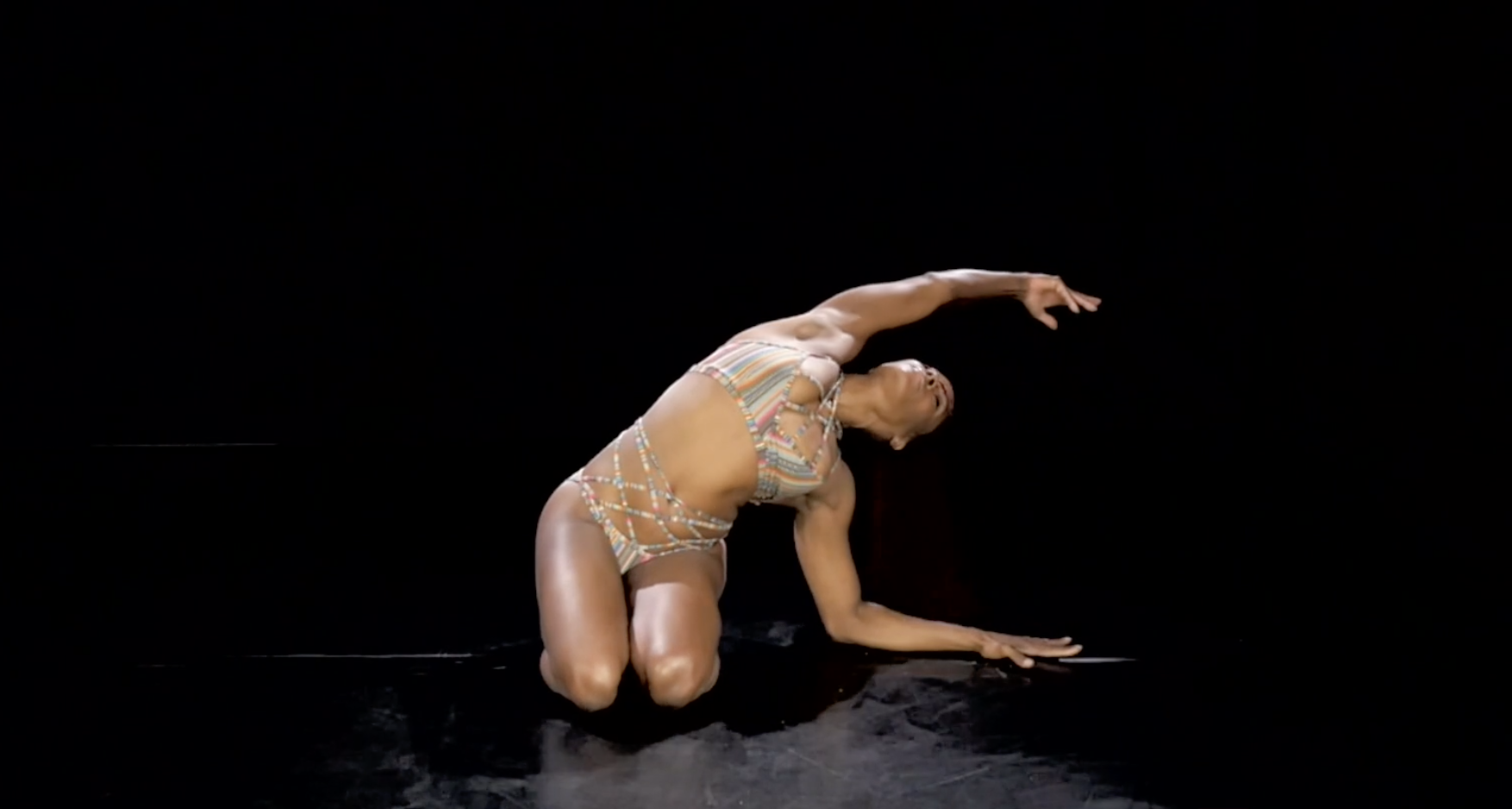
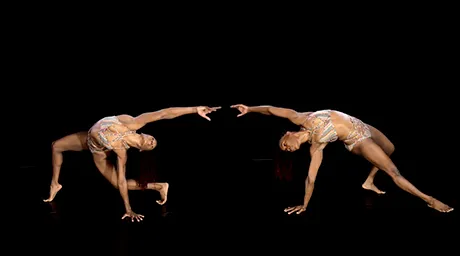
Another valuable warm-up we offer is the Straddle Fold Warm-Up, which incorporates torso-twisting movements. Following this lesson will prepare your upper body and hips for the rotations involved in many ballerina pole poses. Incorporating these two warm-up flows into your routine will significantly enhance your flexibility and readiness for any ballerina variation.
Benefits of Training Ballerina and it’s Variations
Adding ballerina pole variations to your regular pole practice brings several clear benefits. Not only does the ballerina shape look graceful and elegant, but practicing these pole moves regularly can greatly improve your pole skills. Here’s why you should include ballerina variations in your regular training:
1. Perfect for Pole Combos
The ballerina pole move naturally fits into a wide variety of pole combos because of its elegant shape and versatility. With its smooth transitions, you can easily flow into and out of spins, climbs, or other pole poses. Adding ballerina variations helps your routines look graceful and inspiring, creating beautiful shapes and seamless transitions on the pole.
2. Develops Strength and Flexibility
Practicing ballerina pole variations regularly develops both upper-body strength and flexibility. You’ll strengthen your shoulders, arms, and core, essential for maintaining stable poses. Each ballerina variation challenges your flexibility differently. Some improve your shoulder and back openness, while others dramatically enhance hip and leg flexibility.
3. Versatile for All Skill Levels and Styles
The ballerina pole move is versatile enough to perform on both spinning pole and static pole, allowing dancers to experiment and enhance their personal style. You can enter the ballerina from a standing position or aerially after a pole climb. Additionally, ballerina variations look beautiful spinning forwards or backwards, making accessible for everyone.
10 Pole Ballerina Variations
Next, we’ll explore 10 Pole Ballerina Variations, starting with the regular ballerina. While the regular ballerina is considered an intermediate-level pole move, we’re starting here because it’s the most classic variation. After this, we’ll cover easier ballerina variations suitable for beginners, as well as advanced variations that require greater strength and flexibility. Whatever your pole skill level, you’ll find a ballerina variation perfect for your current goals.
1. How to Do the Regular Ballerina Pole Move
Some pole dancers might consider different variations as the classic ballerina pole move. However, we specifically call this variation the regular ballerina, because it closely mirrors the iconic ballet pose known as the arabesque. In addition, when searching for “ballerina pole move” on different pole websites or platforms, you might notice slight differences in the positions labeled as “ballerina.”
Entry Technique and Body Position
Step 1: Start from the Floor
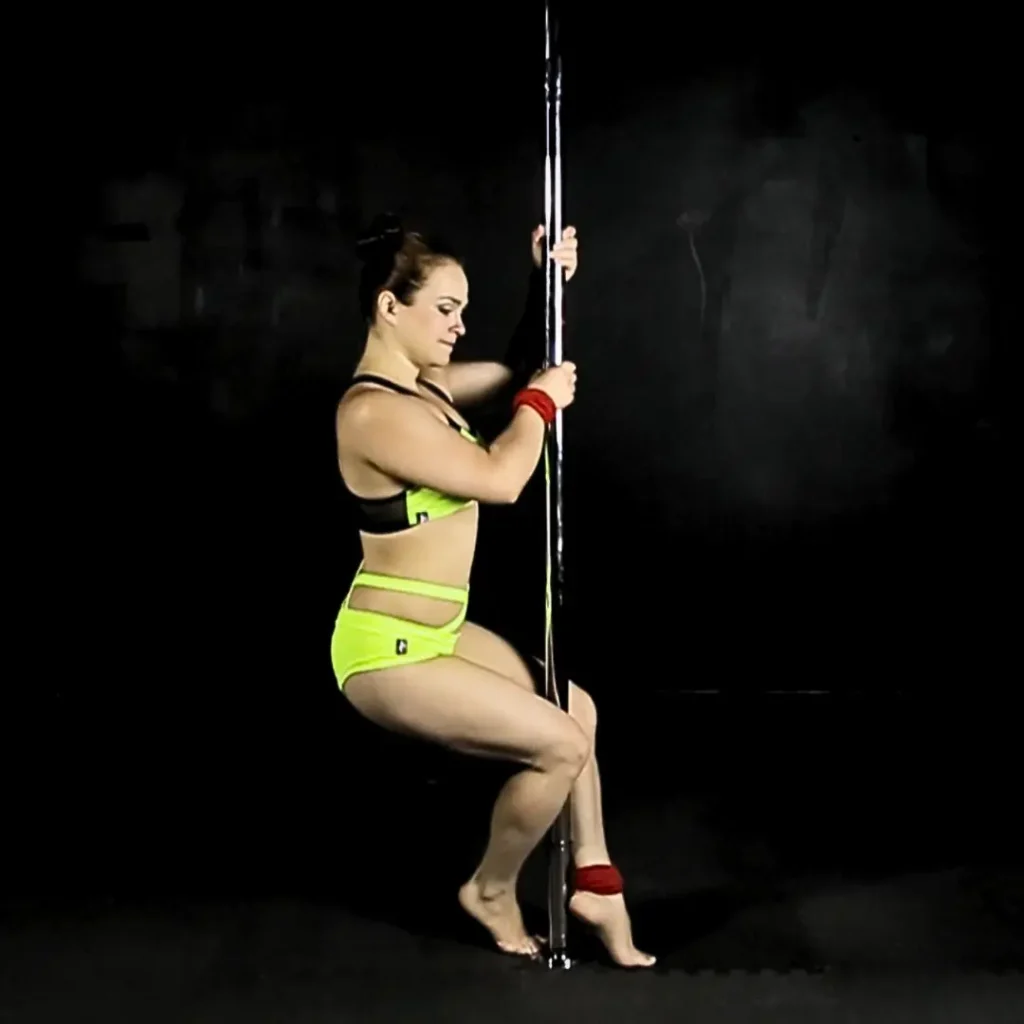
Begin standing next to the pole. Wrap your legs around it, similar to the basic pole climb position. Practicing from the ground helps you safely understand body placement before trying it aerially. At 123poling, we always start teaching from the floor to ensure safety and proper understanding of pole positioning.
Step 2: Forward Fold Position
Gently fold your upper body forward. This helps clear your ribcage from the pole and places the pole near your hip bone. Practicing this fold from the floor first makes learning safer. If you have flexible shoulders, you may skip this fold altogether. However, while this may feel easy from the floor, doing it aerially demands extra skill and strength. For best results, we recommend first mastering our Crossed Leg Bow pole lesson, available on 123poling. It specifically teaches you the forward-fold positioning needed for safely transitioning into the aerial ballerina pole move.
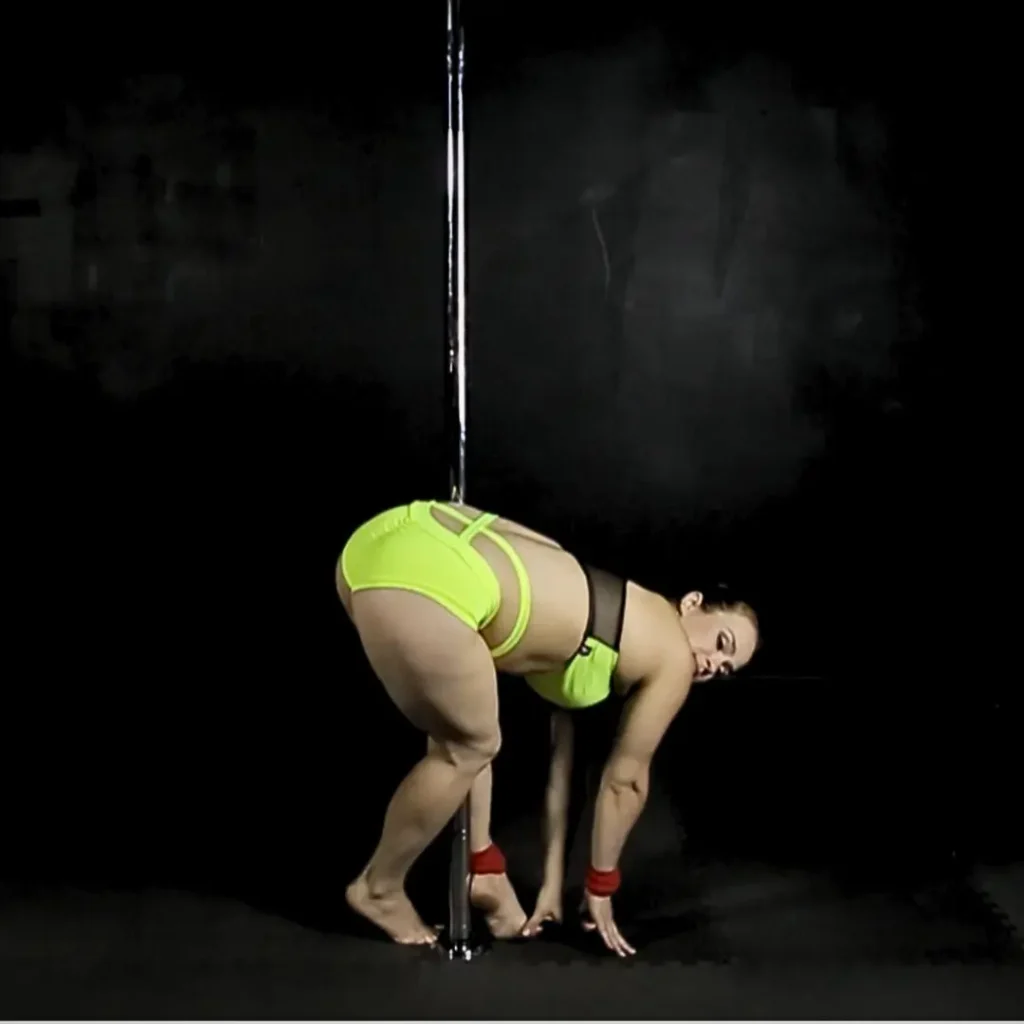
Step 3: Twist and Lift Your Torso
Once you’ve folded forward, lift your gaze upward. As you look up, your torso will naturally follow your gaze and rotate into the correct twisted position. This torso twist is essential, especially if your shoulders are less flexible. By looking and twisting upward, your chest will align correctly, allowing your shoulders to open naturally, even if flexibility is limited. Keeping your chest twisted and lifted ensures the pole remains comfortably positioned by your hip bone, setting you up perfectly for the final ballerina shape.
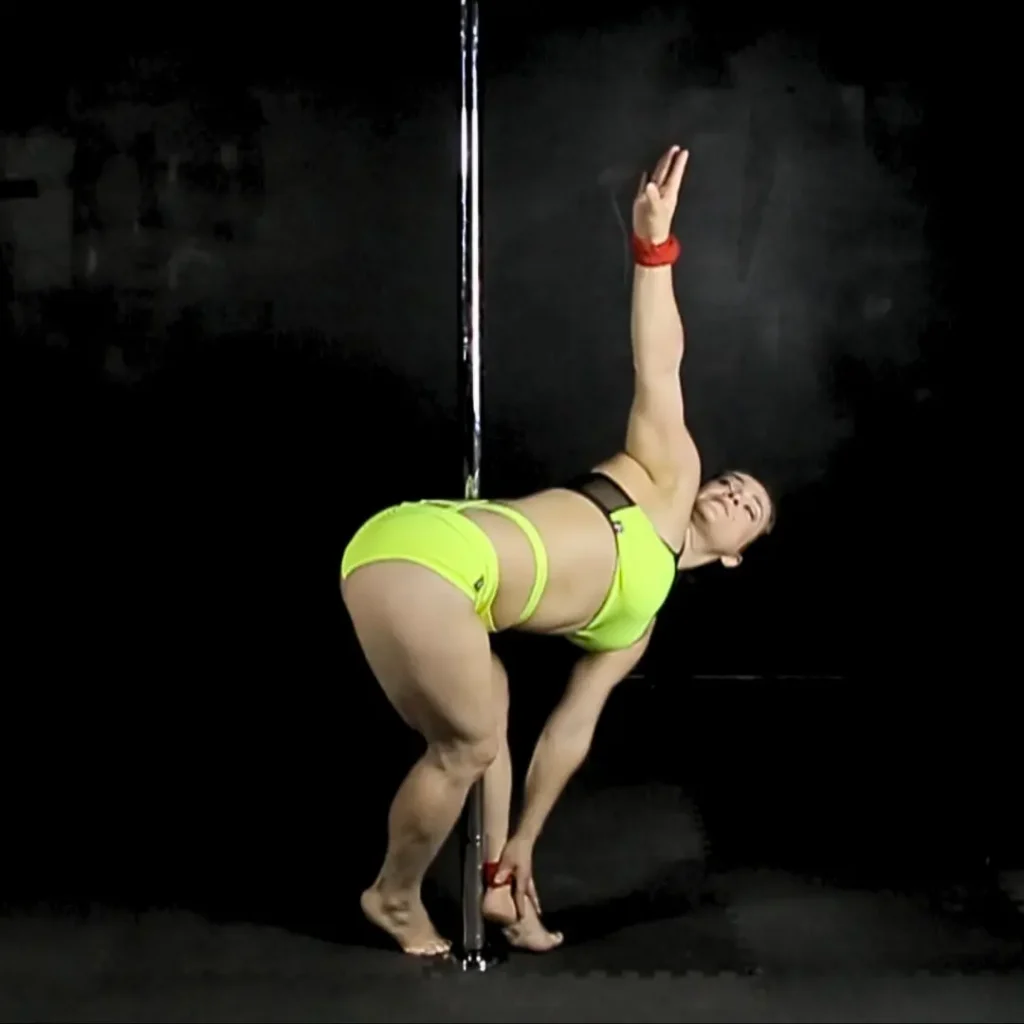
Step 4: Lift and Extend into Position
Lift your torso into an upright position while maintaining the twist you achieved earlier. This twist allows you to comfortably place your bottom hand onto the pole. With a secure grip, confidently extend your legs (one forward and the other backward) to fully achieve the classic ballerina pole move. Even though your feet remain on the floor, this practice helps you understand exactly how your body should feel when performing the ballerina pole move aerially.
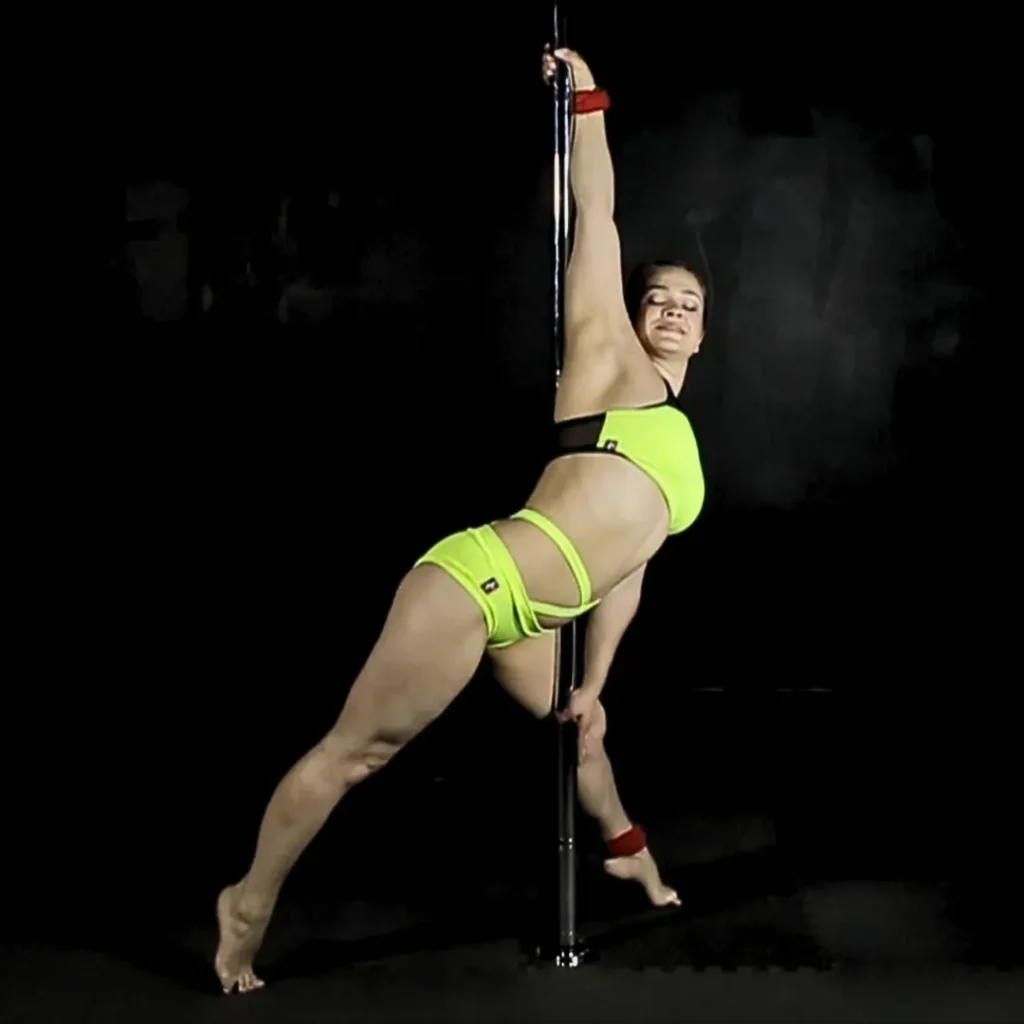
Tip for Flexible Shoulders:
If you already have flexible and open shoulders, you might not need to use the forward fold technique. Instead, you can enter directly into the ballerina pole move by rotating your torso and extending your limbs right away, without folding forward. This allows you to smoothly achieve the ballerina shape without the additional torso fold, creating cleaner lines and easier transitions.
Step 5: Practicing the Move Aerially
When you feel confident, perform the ballerina from a pole climb. Climb the pole, stabilize yourself in a standing position, and follow the exact steps described above. Fold forward, look up, reach up, twist your torso, lift up to reach for the pole. Place both hands on the pole and open up into the full regular pole ballerina.
If you’re ready to master the ballerina pole move step-by-step with clear and detailed instructions, you can start your free pole training with us today at 123poling!
2. Mastering the Ballerina Knee Hold on the Pole
This variation is an excellent starting point if you’re newer to ballerina pole poses. You can practice this move safely beginning from the floor. We especially recommend performing it on a spinning pole, which enhances the elegance and charm of the pose. Start by holding the pole in a regular grip, then perform a smooth pirouette, transitioning your top hand into a twisted grip. From there, slightly swing your body back to initiate rotation and gently ease into the full ballerina knee hold position. Remember, this variation still requires open shoulders and good torso flexibility, so warming up with exercises mentioned earlier will greatly enhance your comfort and success in this pole pose.
3. Cross Leg Ballerina: Creating Beautiful Leg Lines
The Cross Leg Ballerina is a graceful progression from the Ballerina Knee Hold, making it perfect for beginner pole dancers who’ve already mastered the previous variation. This pose beautifully emphasizes elegant leg lines by crossing your legs around the pole, creating a secure yet visually pleasing pole shape. Watch the full pole lesson here.

4. Learn the Ballerina Spin for Fluid Transitions
Unlike other ballerina variations, the Ballerina Spin isn’t a stationary pole pose. Instead, it’s a graceful pole spin. On a static pole, you’ll perform this spin by starting with a Back Spin from a standing. Then begin to twist around the pole transitioning into the Ballerina pose. Since on a static pole all the spins are descending, you will be lowering down into the floor, creating a beautiful flow. On a spinning pole, you can hold the shape longer, turning it into an elegant low flow spin. Practicing this variation helps you build confidence in your pole transitions and creates flowing, continuous pole routines.
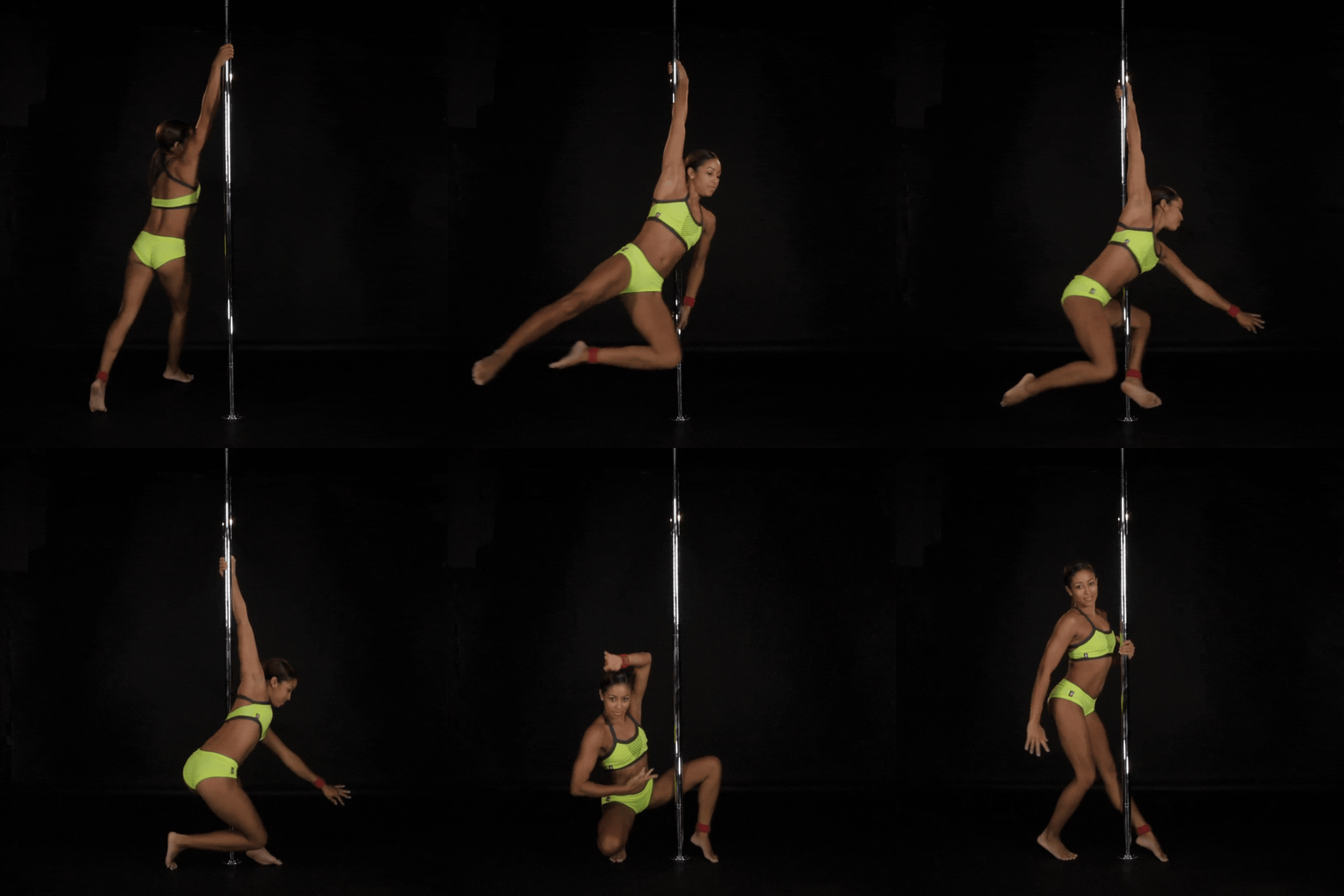
5. Alvin Ailey Ballerina: Dance-Inspired Strength and Grace
The Alvin Ailey Ballerina pole variation takes inspiration from Alvin Ailey, a legendary modern dance choreographer famous for blending strength, fluidity, and expressive ballet lines. In pole dancing, the Alvin Ailey Ballerina is considered the next step after mastering the regular ballerina variation.
This pole pose requires increased torso twisting and shoulder openness to achieve its distinct, elegant shape. Your top arm reaches upward while the bottom arm extends downward, forming a strong diagonal line. This beautiful diagonal line created by your arms perfectly mirrors your extended bottom leg, resulting in graceful, parallel lines.
Meanwhile, your other leg is bent neatly into a classic ballet passé position, truly emphasizing its ballet roots. The Alvin Ailey ballerina variation beautifully embodies ballet aesthetics, adding sophisticated lines and elegance to your pole dancing repertoire. Follow the full step-by-step pole lesson by Sammy Picone and learn this pole shape free.
6. How to Do Elf Pole Move
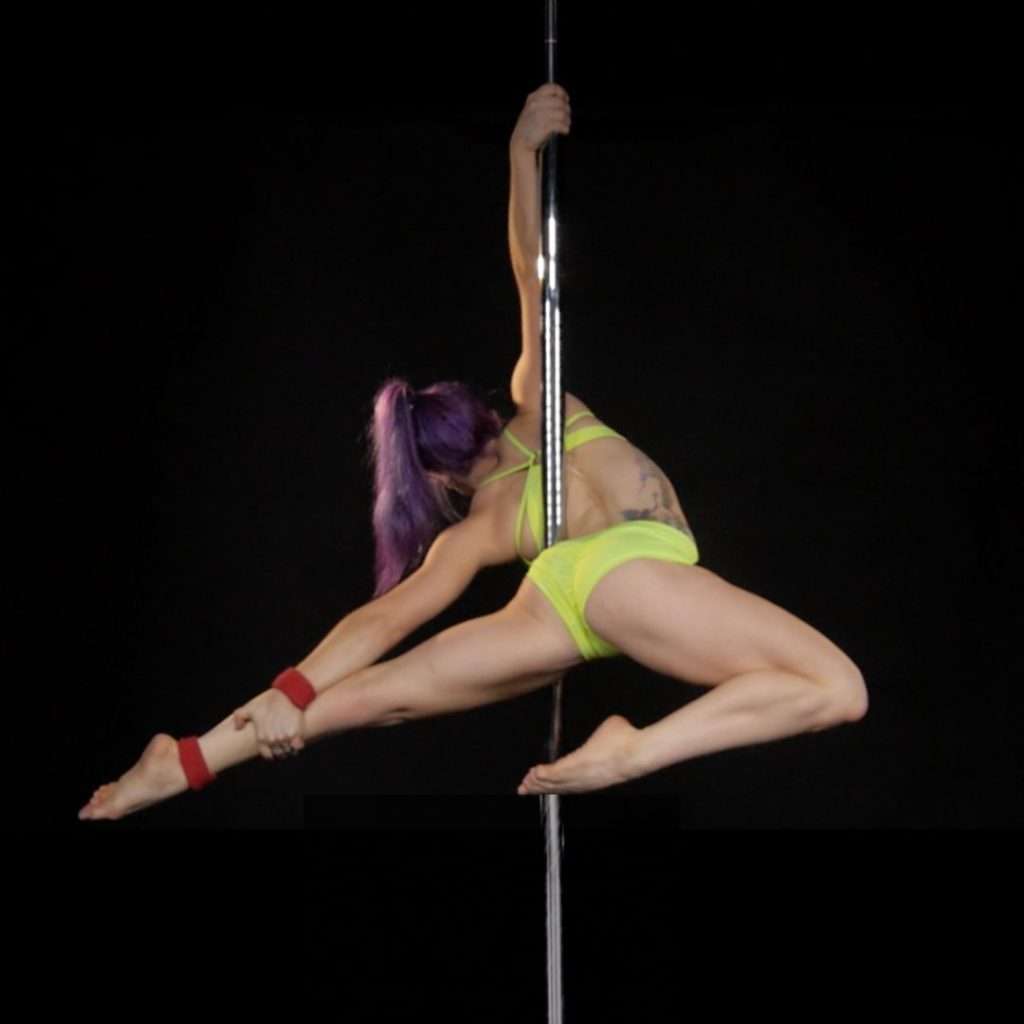
Even though this pole move is called Elf, it’s still considered part of the pole ballerina family. This variation can be adjusted based on your flexibility level. The classic Elf pose involves extending your leg fully, but if you have limited flexibility in your hips or hip flexors, you can keep the leg bent comfortably.
For pole dancers with advanced flexibility, our Elf pole lesson includes an even more challenging variation. In this advanced version, your elbow hooks around your back leg, creating an impressive shape that requires significant shoulder and hip openness. Whichever Elf variation you choose, this ballerina-inspired shape is a graceful addition to your pole repertoire.
7. Forward Ballerina: Exploring Forward Spinning Entry
Although the Forward Ballerina might look similar to the cross leg ballerina variations, it stands out due to its unique and more advanced entry method. Unlike the Cross Ballerina pose, the Forward Ballerina requires you to enter the move while spinning forward on a spinning pole. This forward spin helps you smoothly transition your body around the pole and positions your hips behind it. Because of this dynamic entry and the need to control your rotation and alignment, the Forward Ballerina is considered an advanced pole variation.
8. Backwards Ballerina: Exploring Reverse Entry and Shape
The Backwards Ballerina is an advanced ballerina pole variation performed on a spinning pole. You’ll enter the move by spinning backward, using the momentum of the spin pole to naturally guide your hips behind the pole. This backwards entry requires additional upper-body strength and considerable flexibility, especially in your spine and hip flexors. In the final pose, your bottom leg uniquely hooks around the pole, your spine twists deeply, and your back arches to create a graceful and striking shape. Your top arm reaches behind the pole, further increasing the demand on your shoulder flexibility. Due to these unique physical requirements, this variation is considered more advanced, enhancing your overall strength, flexibility, and spinal mobility.

9. Flying Ballerina: The Ballerina-Superman Fusion on the Pole
The Flying Ballerina lives up to its name by combining the elegance of the ballerina shape with the strength and extension of a flying Superman pose. This variation takes the classic ballerina lines and lifts them fully into the air, creating a powerful, dynamic shape. Your body is nearly horizontal, requiring strong core engagement, deep spinal rotation, and open shoulders to maintain balance and form. The top arm presses down, the back leg stays fully extended and lifted, and the bottom leg anchors the position by pushing firmly into the pole. It’s a true test of full-body control, blending grace and strength in motion.
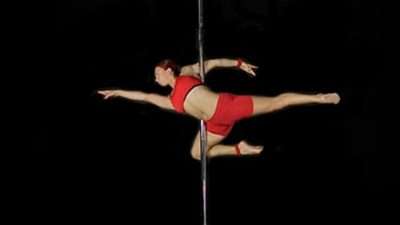
Ballerina Split: Strength Meets Extreme Flexibility
The Ballerina Split is one of the most demanding ballerina pole variations and requires advanced active flexibility, especially in the hips, hamstrings, and hip flexors. Unlike a passive split on the floor, this variation requires you to engage your muscles while holding the shape in the air or partially suspended on the pole. Your front leg extends forward and your back leg reaches behind, mimicking a full front split while your torso stays upright and slightly twisted. Achieving clean lines in this pose means actively lifting and engaging both legs while maintaining proper shoulder positioning and core stability.

Pole Shapes That Blur the Lines: Ballerina or Not?
As pole dancing continues to evolve, so do the interpretations of classic shapes like the ballerina. Two pole moves that blur the lines are the Guardian Angel and the Shishi Spin. In both of these variations, the chest wraps around the front of the pole while the hips stay to the side or slightly behind. Doesn’t it closely resemble the alignment seen in ballerina pole poses?
Gardian Angel

Shi Shi Spin

While they aren’t traditionally labeled as ballerina variations, the positioning and flow are definitely similar. What do you think? Should Guardian Angel and Shishi Spin be considered part of the ballerina family? Share your thoughts in the comments. We’d love to hear how you define the ballerina shape in your own pole practice.
Whether you’re working on your first ballerina variation or refining more advanced ones, each shape adds something unique to your pole progress. It might be control, flexibility, or creative flow. These positions aren’t just beautiful on their own. They also work incredibly well when combined into smooth, connected pole combos. In our next blog, we’ll be breaking down ballerina-based combinations. We are here to help you put these pole moves together in a way that feels fluid and strong. Until then, if you’re ready to train each variation step-by-step, you can start your free pole training right now at 123poling.


Responses