
If you’re just starting your pole dancing journey and looking to purchase a pole for your home pole studio, one of the first big decisions you’ll face is choosing between a static or spinning pole.
Both types have their benefits, but which one is best for beginners? In this guide, we’ll break down the key differences, pros and cons, and help you decide which pole is the right fit for your home pole studio training.
What’s the Difference Between a Static and a Spinning Pole? #
Before diving into which one is better for beginners, let’s clarify what makes these poles different.
- Static Pole
A static pole stays in place when you grip it, meaning it does not rotate. All movement comes from your body and how you transition between pole tricks. You will have to learn how to create momentum for your pole spins.
✅ Best for:
• Learning the fundamentals of pole technique
• Developing grip strength and control
• Practicing pole poses and pole holds without added motion
Read the full blog about static pole and what it is best used for.
- Spinning Pole
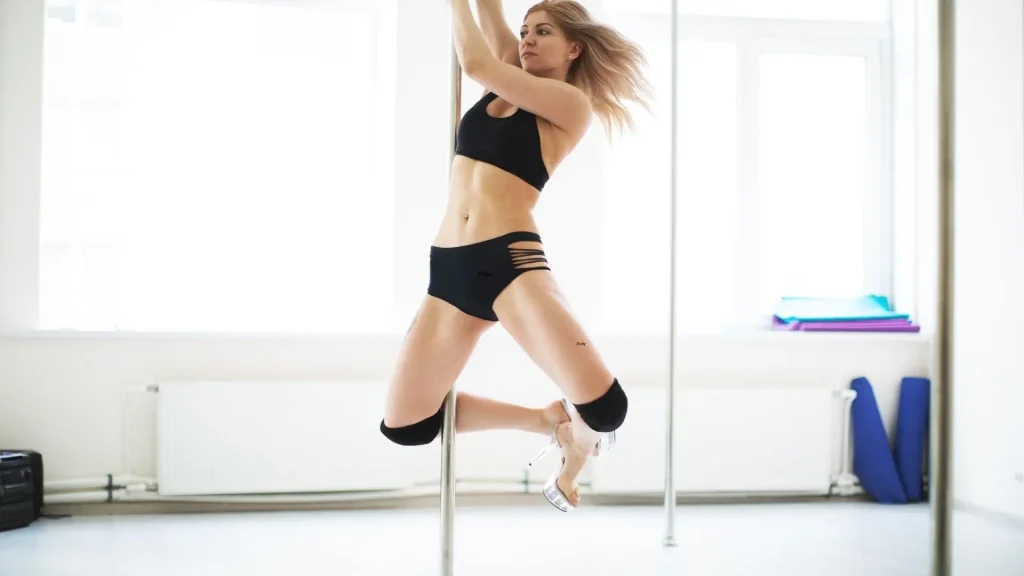
A spinning pole rotates freely when force is applied. Instead of climbing and staying still, your movements will create momentum, causing you to spin.
✅ Best for:
• Dynamic, fluid movements
• Aerial spins and graceful transitions
• Building endurance and control over motion. Learn more about spin pole here.
Most modern dance poles offer a switchable function, meaning you can toggle between static and spinning mode—the best of both worlds!
Should Beginner Pole Dancers Start with a Static or Spinning Pole? #
Now, let’s get to the big question—which is better for pole beginners?
Reasons to Start with a Static Pole #
1️⃣ Better Control Over Movements
As a beginner, learning how to grip, climb, and hold positions is crucial before adding extra motion. A static pole helps you build foundational strength and pole technique without the added challenge of momentum.
2️⃣ Easier to Learn Proper Pole Grip & Body Engagement
Static poles force you to develop proper body mechanics, teaching you how to engage muscles, push, and pull for controlled movement.
3️⃣ Lower Risk of Motion-Related Dizziness
Spinning poles create momentum, and pole beginners often struggle with dizziness while learning to adjust. Training on a static pole first helps your body adapt to inversion and aerial pole movements before introducing spin.
4️⃣ Essential for Learning Pole Tricks & Pole Holds
Moves like the Pole Sit, Fireman Spin, and Climb are best learned on a static pole since they require strength and balance rather than momentum.
Reasons to Start with a Spin Pole #
1️⃣ Develops Flow & Fluidity Sooner
On a spinning pole, moves look more graceful and effortless since the pole generates movement for you. If your goal is to focus on dance flow rather than strength-based tricks, starting with a spinning pole can help.
2️⃣ Requires More Upper Body Strength for Spins
Since the pole itself is rotating, you don’t have to generate as much force to execute pole spins, making it feel smoother compared to a static pole. However, it adds an additional force while the pole is rotating. For some pole tricks, you will need to hold on to the pole more, requiring additional strength.

3️⃣ Easier for Transitions Between Pole Moves
Once you master control, spinning poles allow for seamless transitions, helping you connect movements into beautiful dance sequences.
4️⃣ Prepares You for Pole Competitions and Pole Performances
Most pole competitions require you to showcase your pole skills on both static and spinning pole. Starting to practice pole dancing on a spinning pole will help you to prepare your pole performances more efficiently.
So, Which One Should You Choose? #
The Best Option for Most Pole Beginners is to practice Static Pole First, Then Spinning.
Most instructors recommend starting with a static pole to build strength, confidence, and control before transitioning to a spinning pole. In our pole lessons, we provide instructions on how to do pole moves on a static pole first. Once you are comfortable and familiar with pole techniques, you can then add momentum and try it on a spin pole. However, do not think it will take you years to progress from a static to a spinning pole. Some beginner pole dancers take a few pole classes to get used to movement of a static pole and start adding spin pole momentum to their training.
If you’re training pole at home, a dual-function pole that switches between static and spinning mode is your best investment. This allows you to:
1. Learn fundamentals on static
2. Experiment with spinning as you progress
3. Get the best of both worlds without needing to buy two poles
Some great dual-mode poles include:
• X-Pole XPERT Pro – One of the most popular adjustable poles in America
• Lupit Pole Classic – Known for high-quality grip and smooth transitions. This is our personal preference.
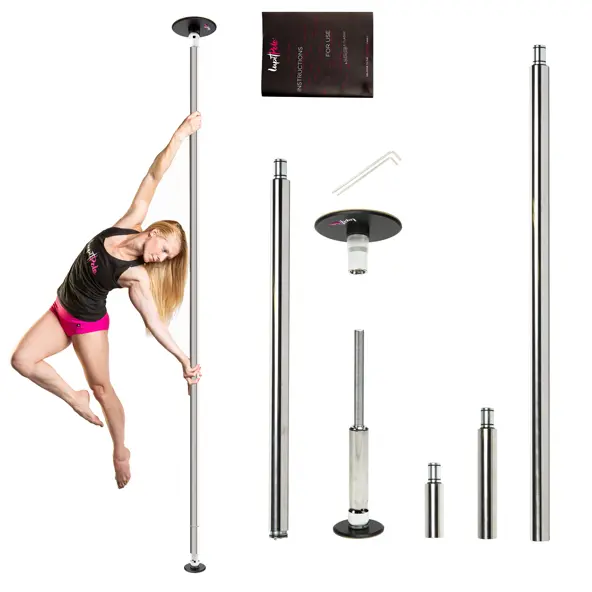
• Affordable Portable Dance Pole from Amazon – Budget-friendly with dual function. Spinning mode can be a bit tight but will serve it’s purpose for the first few years of your pole journey. Watch our review here and if you decide to give it a try, you can use our affiliate link here (it will cost you the same and we will get a small commission as a form of gratitude and support).
Final Thoughts: Static vs. Spinning Pole for Beginners #
✔️ If you’re brand new to pole dancing, start with static pole mode to master grip, strength, and control.
✔️ If your goal is dance flow and fluid movement, you can experiment with spinning mode once you’ve built foundational pole skills.
✔️ If you want the best learning experience, invest in a dual-function pole that lets you switch between both.Regardless of your choice, the best pole for you is the one that helps you feel safe, confident, and excited to train. Ready to start your pole journey? Let’s get spinning!


