
A static pole, often referred to as a stationary pole, is an integral component of pole dancing that remains fixed in place without any rotational movement. Unlike its spinning counterpart, the static pole provides stability. It is a versatile tool for performers to execute a variety of pole moves, spins, and holds. Whether you are a novice or an experienced pole dancer, the static pole is an essential apparatus in your repertoire.
Static Pole History #
Throughout the history of pole dancing, significant advancements in pole technology have revolutionized the art form. Initially, when pole dancing was first introduced to the public, only static poles were available. However, as the demand for more dynamic and versatile performances grew, pole manufacturers developed innovative solutions. Today, modern poles often come with dual-mode functionality, offering both static and spinning modes in a single pole. This technological advancement allows pole dancers to effortlessly switch between modes by simply turning the base or adjusting a screw mechanism. The ability to transition between static and spinning modes provides dancers with unprecedented flexibility and creativity in their pole routines. This technological breakthrough has truly transformed the possibilities within the world of pole dancing. Altogether offering dancers the best of both worlds in a single pole apparatus.
Movement of a Static Pole #
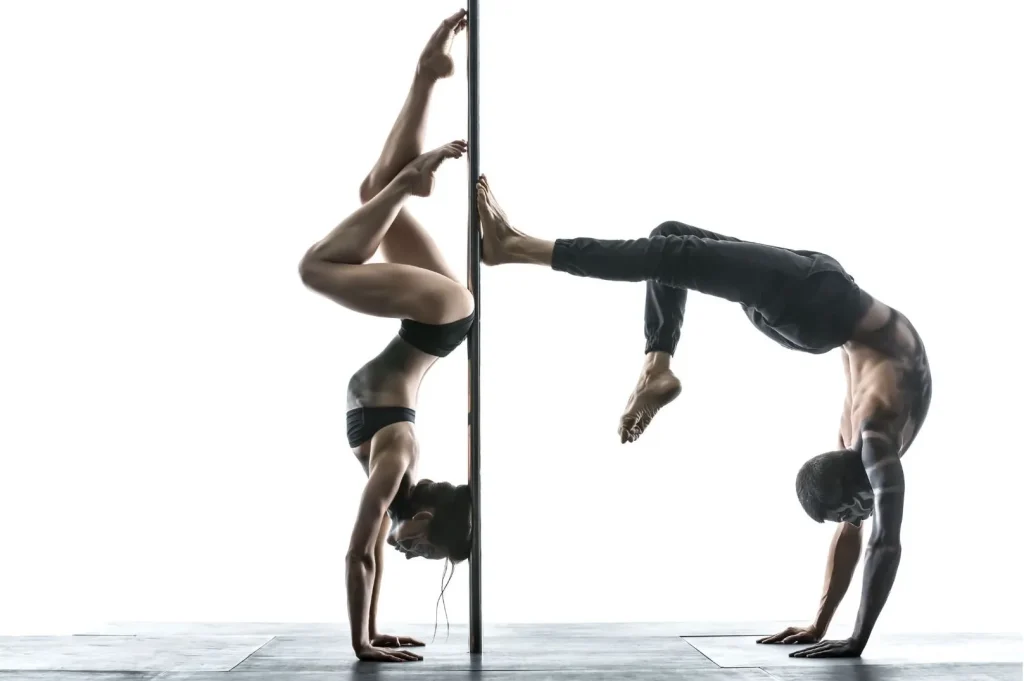
The practice of static pole dancing emphasizes strength, control, and technique, as it requires dancers to generate their own momentum and rely solely on their physical abilities. By eliminating the spinning element, performers can concentrate on perfecting specific poses and seamless transitions, enhancing their overall skill set. This aspect of pole dancing cultivates a strong foundation, enabling individuals to develop their strength, coordination, and body awareness.
Why is it good for pole beginners? #
The static pole serves as a starting point for beginner pole dancers, allowing them to become familiar with the foundational movements of pole dancing. By honing their pole skills on a stationary pole, newcomers can gradually build up their strength. As well as master fundamental techniques before progressing to more advanced levels. This gradual progression helps prevent injuries and provides a solid base for performers to advance further in their pole dancing journey.
Use In Competitions #
In pole dancing competitions, both static poles and spinning poles play crucial roles in showcasing the skills and artistry of the performers. The static pole is often utilized to demonstrate strength, control, and technical precision. Competitors showcase various moves, poses, and intricate transitions that highlight their ability to manipulate their own momentum and execute complex maneuvers with grace and poise. On the other hand, spinning poles add an element of dynamic movement to routines. Dynamic poles allow dancers to showcase fluid spins, spins, and acrobatic combinations that captivate the audience. Competitors often incorporate spins, twists, and aerial tricks that are uniquely enhanced by the rotational capabilities of the spinning pole. By utilizing both static and spinning poles, competitors have the opportunity to display a diverse range of skills, creativity, and showmanship.
Use In Exotic Pole Dance #

The static pole is a key component in the world of exotic pole dance, where it is primarily utilized to create mesmerizing and sensual performances. In exotic pole dance, the focus is on blending sensuality, fluidity, and athleticism to captivate the audience. The stationary pole provides a stable and secure base for pole dancers to showcase their strength, control, and artistry. It allows performers to execute controlled and precise movements, emphasizing seductive poses, dramatic holds, and breathtaking floor work. It is a versatile tool for pole dancers to create dynamic pole sequences, combining graceful transitions, sultry spins, and intricate floor-to-pole transitions.
In conclusion, the static pole plays a pivotal role in the world of pole dancing. It serves as a starting point for pole beginners to develop strength, coordination, and body awareness. As well as providing a platform for advanced pole dancers to refine their technique and unleash their creativity. Whether used independently or in conjunction with a spinning pole, the static pole remains an essential apparatus that facilitates growth, skill development, and artistic expression within the realm of pole dancing.


